Tiny Town: An Ode to Summer
Oh how thankful I am for an imaginative family.

i.
The honeysuckles whispered to each other, saying,
I’m glad we are part of something.
And a part of something they were.
Lavender hair reached towards the sky
Watching kids be kids for years
Their leaves hid lacrosse balls
Their soil nutrient
ii.
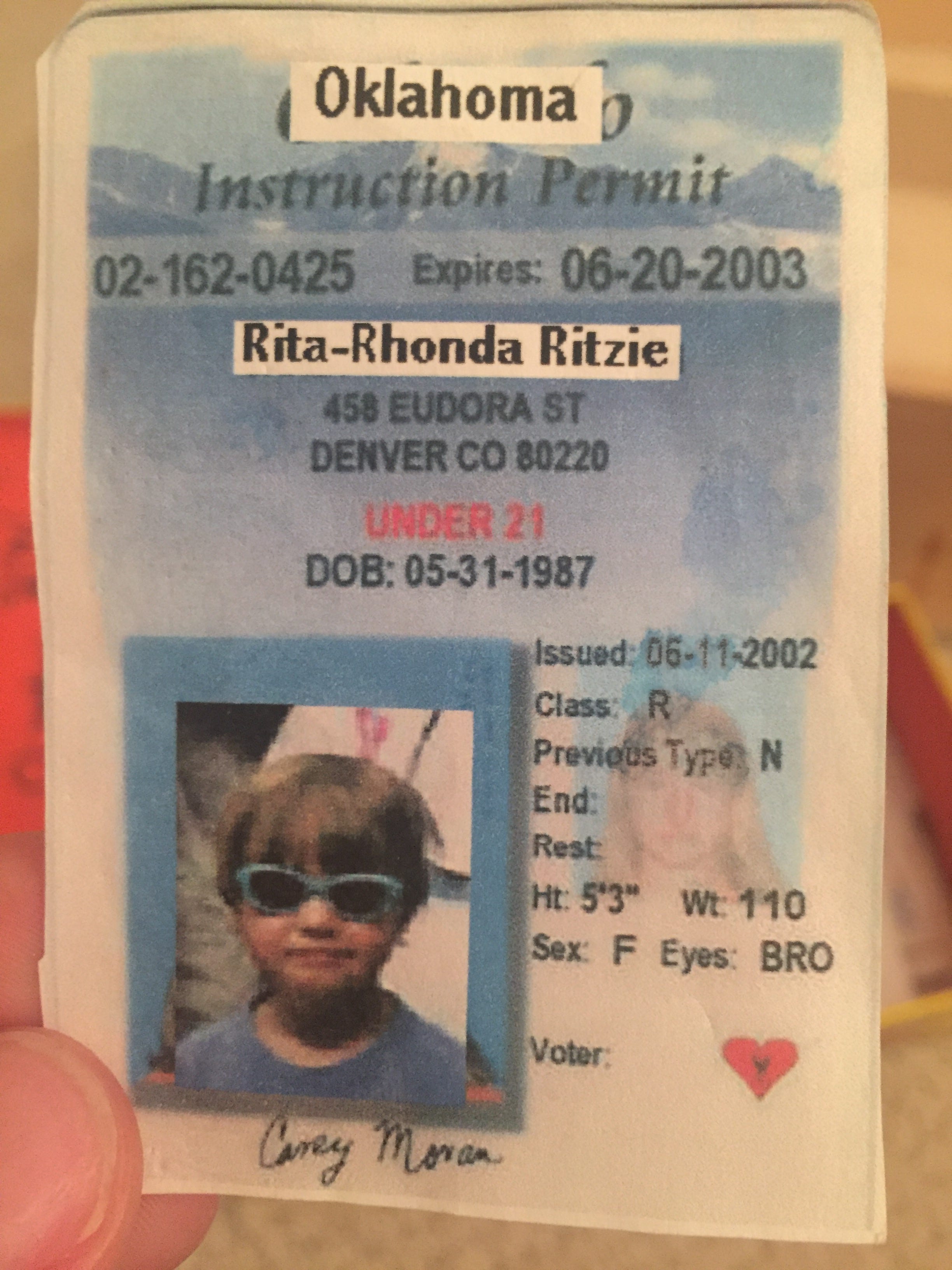
The neighborhood knew that 458 was the house of play, the home of invention. With three daughters, there was never boredom, but only fun to be had. And bickering. So much bickering. But each spring, as the tulips exploded from the wet earth, and the grass finally grew its hair out, the kids of Eudora would gather each Saturday in our driveway, popsicle sugar dripping down their soft chins and splashing onto their stripped t-shirts. We would congregate for our weekly games. The first being, Tiny Town. This game required each person to have an ID, so we made them out of starched construction paper, scrawling our chicken scratch. My name was Rita-Rhonda (one name) Ritzie, and at age 4, I knew about alter egos. Triple R took that town by storm.
We would laboriously chalk down our lengthy driveway (one that took all five of us to clear in heavy snow). We would map out each kid’s territory. Carey, the oldest sister, was the Mayor. Of course. All hail Carey, Queen of Eudora. The middle sister, Mallory, was the Treasurer. Stay away from Mal and her frugal wrath. And I, the squat, bowl-cut nobody, was a Farmer. My knees were always crackled with mud, grass stuck to the soles of my shoes like popcorn kernels in the molars. I was the worker, the laborer, the salesman. My friends (the neighborhood kids) would stop by my farm stand and buy all of the succulent corn, the misted cabbage, the dirty carrots, the plump potatoes.
iii.
Heaven, stretched, is what that driveway was
All that glittered turned into memory
On the days that were hard to get by
iv.
Our currency was trinkets. Balls of rubber bands from our mother’s desk, packages of sweets stolen clandestinely from pantries down the block. Our pantry was only flax seeds and Kashi Heart Health, so the daughters of 458 asked the neighbors for treats as bargaining. Gushers oozed their juice, peanut butter cracker crumbs littered the tree roots underneath the swing, and CapriSuns splattered, smearing the chalk. My farm stand did well, but not as well as Mason’s game cart. He knew what we all needed at the time, and it wasn’t fruit and vegetables.
We were the commerce queens, the produce princesses, the bargaining bafoons. Each warm Saturday meant fifteen kids running around the yard, their brains on fire with imagination stored up from the week’s worth of sitting in desks at school. Our mother would open the windows in the house as she milled about with her constant glass of iced tea, one lemon. Kids would come over sweaty from soccer games, smelling of orange peels, and camaraderie. Our driveway was the universe. We were safe, we were working, we were crafting whole worlds with chalk and rules.
v.
You remember childhood, yes?
Those days of curiosity licking your face
Summer meaning freedom
After school meaning snacks
Never napping, always conjuring up new schemes
Pranks and tomfoolery
Can’t we get back to that levity?
vi.
We played capture the flag in those yards that were held together with a white fence, one that my father sanded within an inch of its life. Our little feet pattered along the brick walkway leading from the front to the back, whipping past the honeysuckles (remember those?) as they giggled with each other about how silly we all were. The doctor who lived next door knew all of our ailments and grinned seeing us healthy and playing after we sat in his living room with hacking coughs, sore throats, and gashes on our knees. The pine trees quaked in the spring breeze, and the crabapples in the back begged to be noticed-not just as mush in the fall, but as real fruit in the spring. Underneath the covered patio, my mother busied herself, again with her iced tea in one hand, fluffing pillows and attempting to sweep the outside earth.
vii.
Our mothers and their hands that work
she lines up the raincoats on hooks
to make sure each beating heart is protected
and can grab one easily on the way
to live their fulfilled lives
she braids their soft hair
with the rainwater she collected
and cracks eggs in a pan
salted butter on golden toast
fresh coffee in ceramic mugs
she picks the mud from the soles of their shoes
and does their laundry on a gentle cycle
ready to fold when warm with the scent of lavender
she dusts, sweeps, scrubs, rinses, and washes
all to make a space excellent for everyone
everyone but her.
viii.
We used to dream then. Big, sweeping dreams of castles and stadium lights and crushes and becoming chefs and having families of our own. Laced in mud, sweat, and innocence, I went about my tomboy childhood like a wrecking ball. Everything was a playground, including my mind. Knocks on neighbor’s doors in the summer just before dinner asking parents if Charlie was home so we could go play Spud in the yard while the crickets woke up, or lazing about in the sun-soaked afternoons talking about our teachers and how many times we got in trouble that day for talking was our fuel. As were Gushers. Always Gushers. Sweet, sticky, juicy orbs popped into our mouths with explosions of flavor—because we had the time to savor.
We photosynthesized as children, prospering with and around each other. Growing up, we never knew that this world could smother us or kill honeysuckles with too much rain.